

What to Consider When Installing a Commercial Elevator
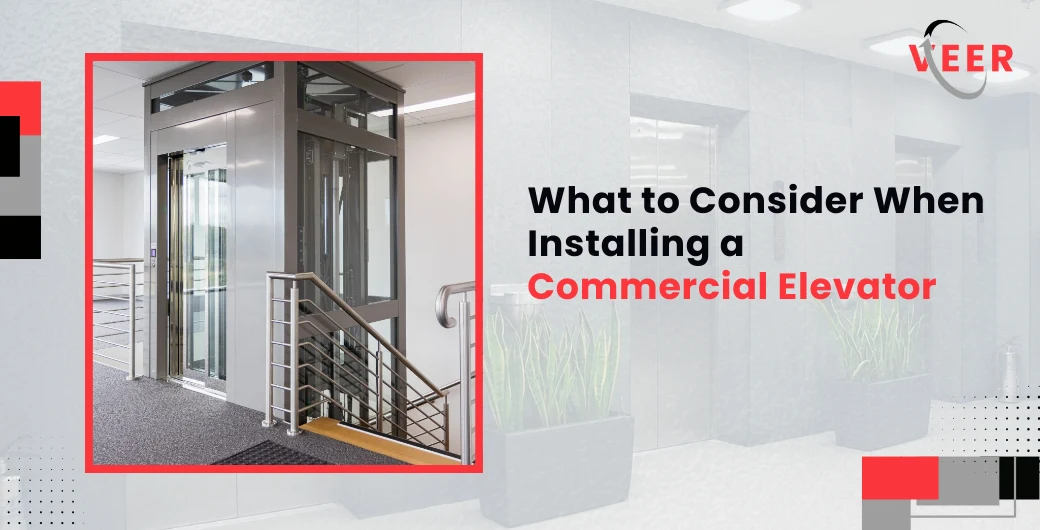
A commercial lift is not a mere luxury, it’s the very heart of your building, the conduit for human traffic, and a means to make your building more accessible to all. A good commercial lift installation is not an easy task that it seems to be. It’s a serious investment that needs planning, vision, and a trusted partner to assist you in carrying it out.
We at Veer Elevator Solution are of the opinion that an educated client is a powerful client. When you are building a new building or upgrading an old one, these are the decisive parameters to keep in mind so that your elevator installation is a huge success.
1. Understanding Your Building’s Unique Needs
Before diving into models and finishes, the first step is a thorough assessment of your building’s specific requirements. This foundational analysis will dictate every subsequent decision.
- Traffic Flow and Capacity: Who will be using the elevator, and how many of them? An office building with peak morning and evening rushes has different needs than a hospital requiring large, sturdy elevators for stretchers and medical equipment, or a luxury hotel where a smooth, quiet ride is paramount. Accurately estimating daily traffic patterns is crucial for determining the necessary capacity, speed, and number of elevators required to prevent frustrating bottlenecks.
- Building Height and Type: The vertical distance the elevator needs to travel is a primary factor. Low-rise buildings (typically up to six floors) may be well-served by cost-effective hydraulic elevators. For mid to high-rise structures, traction elevators are the superior choice, offering greater speed and energy efficiency.
2. Choosing the Right Type of Elevator
Once you understand your building’s profile, you can select the appropriate elevator technology.
- Traction Elevators: These elevators use steel ropes or belts and a counterweight system. They are ideal for taller buildings due to their speed and efficiency. Modern Machine-Room-Less (MRL) traction elevators are a popular choice as they save significant space by housing the machinery within the hoistway itself.
- Hydraulic Elevators: Using a piston and a fluid-driven system, hydraulic elevators are a robust and economical solution for shorter buildings. While they are slower than traction models, their maintenance can be simpler and the initial installation cost lower.
Planning a commercial elevator installation?
Let Veer Elevator Solution guide you every step of the way. Contact us today for expert advice and a customized solution tailored to your building’s needs.
3. Navigating Codes and Compliance
This is not something that can be bargained on for any commercial elevator installation. Elevators have strict safety and accessibility requirements, the Americans with Disabilities Act (ADA) among them. These cover anything from cabin size and button height to emergency communication systems and fire safety features. Working with a seasoned elevator firm like Veer Elevator Solution guarantees that your installation is totally compliant with national and local codes, preventing failed inspections, costly delays, and possible safety risks.
4. Planning for Space and Structural Requirements
An elevator isn’t just a box; it’s an integrated system that requires significant structural support. Poor space planning is one of the most common and expensive mistakes in an installation project. Key considerations include:
- Hoistway: The vertical shaft in which the elevator travels.
- Pit Depth: The space required below the lowest floor.
- Overhead Clearance: The room needed above the top floor.
Collaborating with your elevator provider and architect early in the design phase is essential to ensure these structural requirements are seamlessly integrated into your building’s plans.
5. Aesthetics and User Experience
While functionality is key, the elevator’s design plays a significant role in your building’s overall aesthetic and the experience of its users. Modern elevators offer a vast array of customization options. From sleek, minimalist stainless steel and glass for a corporate tower to warm wood veneers and sophisticated lighting for a boutique hotel, the interior of the elevator cabin should be a continuation of your building’s design language.
6. Thinking Long-Term: Maintenance and Service
The up-front cost of a commercial elevator installation is just one aspect of the overall investment. An elevator is a sophisticated machine that needs periodic, professional servicing to maintain its safety, dependability, and longevity. In selecting a provider, seek out a company with complete maintenance offerings and prompt service. Preventive maintenance not only avoids costly, unexpected downtime but also increases the lifespan of your equipment, ultimately delivering a better return on your investment.
Entering a commercial elevator project may feel overwhelming, but it needn’t be. By taking the time to thoughtfully weigh these considerations and working with an experienced expert, you can have confidence that your vertical conveyance system is a safe, effective, and worthwhile investment for your building to enjoy for many years to come.
Installing a commercial elevator is not just about vertical transport,it’s about ensuring safety, efficiency, accessibility, and long-term value for your building. From understanding traffic flow and selecting the right elevator type to meeting compliance standards and planning for maintenance, every detail plays a crucial role in a successful installation. By working with an experienced partner like Veer Elevator Solution, you gain the assurance of expert guidance, reliable technology, and tailored solutions that enhance both functionality and user experience. With the right planning today, your elevator system can serve as a lasting asset for decades to come.