

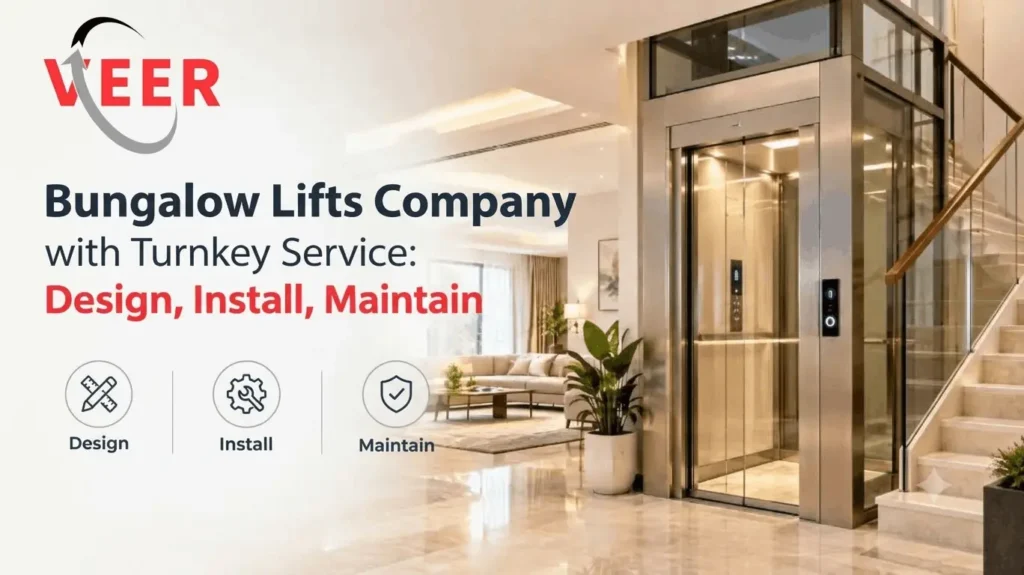
Installing a lift in a bungalow is more than choosing a lift cabin and installing the equipment. A complete residential elevator project can involve lift design, site assessment, technical planning, civil coordination, installation, testing, commissioning, and ongoing maintenance. A bungalow lifts company offering turnkey service can manage these stages through one coordinated process.
A turnkey bungalow lift solution is particularly useful for homeowners building a new bungalow or planning to add a lift to an existing home. The right solution depends on factors such as the number of floors, available space, expected usage, lift capacity, architectural requirements, and the selected elevator system.
This guide explains what turnkey bungalow lift service includes, how the installation process works, what affects cost, what technical requirements need to be considered, and how to choose a suitable bungalow lift company.
What Is a Turnkey Bungalow Lift Service?
A turnkey bungalow lift service is a complete elevator solution where one company manages the major stages of the project, from initial site survey and lift design to installation, testing, handover, and maintenance.
Instead of coordinating separately with a lift supplier, installer, civil contractor, and maintenance provider, homeowners can work with one company for the main lift-related requirements.
A turnkey bungalow lift project may include:
- Site survey and technical assessment
- Lift design and planning
- Lift type and capacity selection
- Equipment supply
- Shaft and landing planning
- Civil and electrical coordination
- Lift installation
- Testing and commissioning
- Final handover
- Warranty support
- Preventive maintenance and AMC
The exact scope depends on the company and project, so homeowners should confirm what is included in the quotation before approving the installation.
What Services Does a Bungalow Lift Company Provide?
A professional bungalow lift company can support a project at different stages, from planning and design to installation and after-sales service.
Bungalow Lift Design and Planning
Bungalow lift design should be based on the actual building rather than using the same configuration for every home.
The design may consider:
- Number of floors
- Available shaft space
- Cabin size
- Door configuration
- Landing arrangement
- Lift capacity
- Architectural design
- Interior finishes
- Electrical requirements
- Pit and headroom requirements
For a new bungalow, lift planning can be incorporated into the architectural design from the beginning. For an existing bungalow, the company needs to assess the available space and structural conditions before recommending a suitable configuration.
Site Survey and Technical Assessment
A site survey is one of the most important steps before selecting a bungalow lift.
During a site assessment, the lift company may evaluate:
- Available installation area
- Shaft possibilities
- Floor-to-floor height
- Pit requirements
- Headroom
- Landing locations
- Structural conditions
- Electrical supply
- Access for installation
- Possible civil modifications
The final dimensions and technical requirements should be confirmed according to the selected lift system and actual site conditions.
Lift Selection and Supply
Different bungalow projects can require different elevator configurations. Depending on the building and homeowner’s requirements, options may include home lifts, MRL lifts, hydraulic systems, panoramic lifts, glass lifts, or customized residential elevator solutions.
The selection should consider more than appearance. Important factors include space, capacity, number of floors, usage, installation requirements, maintenance, and long-term service support.
Bungalow Lift Installation
After the design is finalized and the site is prepared, the lift installation can begin.
Installation may involve:
- Guide rails
- Cabin
- Landing doors
- Drive or motor system
- Control panel
- Electrical connections
- Safety systems
- Door operators
- Lift controls
The installation timeline and process vary according to the elevator type, number of floors, site readiness, customization, and civil requirements.
Testing and Commissioning
The lift should be tested and checked after installation before it is handed over for regular use.
Depending on the system, checks may include:
- Door operation
- Floor leveling
- Control functions
- Safety systems
- Emergency functions
- Smooth starting and stopping
- Operating performance
The exact commissioning procedure depends on the selected elevator system and applicable requirements.
Bungalow Lift Maintenance and AMC
A lift requires regular maintenance after installation. Preventive maintenance allows important components and safety systems to be inspected periodically.
A bungalow lift maintenance or AMC service may include:
- Routine inspection
- Door and sensor checks
- Electrical inspection
- Control-system checks
- Safety-system inspection
- Leveling checks
- Lubrication where required
- Cleaning and adjustment
- Breakdown support
- Spare-parts assistance according to the service agreement
How Does a Turnkey Bungalow Lift Installation Work?
A typical turnkey bungalow lift project can be divided into the following stages.
1. Requirement Discussion
The project starts by understanding the homeowner’s requirements, including the number of floors, expected users, available space, preferred design, and intended application.
2. Site Survey
The lift company assesses the property to determine the available space, possible lift location, structural conditions, shaft requirements, electrical requirements, and civil preparation.
3. Lift Design and Planning
Based on the site assessment, the company develops the lift configuration, cabin requirements, door arrangement, finishes, and technical specifications.
4. Quotation and Technical Specification
A quotation is prepared with the proposed lift system, specifications, project scope, installation requirements, and applicable costs.
5. Design Approval
The homeowner reviews and approves the proposed design and specifications before the project moves forward.
6. Civil and Electrical Preparation
Any required civil or electrical preparation is completed according to the finalized lift design.
7. Lift Supply and Installation
The lift equipment is supplied and installed according to the approved technical configuration.
8. Testing and Commissioning
The installed lift is tested, adjusted, and checked before handover.
9. Final Handover
After the required installation and checks are completed, the lift is handed over to the homeowner.
10. Maintenance and After-Sales Support
Ongoing maintenance and technical support can be provided according to the warranty and maintenance agreement.
Which Type of Lift Is Suitable for a Bungalow?
There is no single lift type that is suitable for every bungalow. The appropriate system depends on the home’s structure, number of floors, available space, expected usage, capacity requirements, and design preferences.
| Lift Type | Typical Application | Key Consideration |
| Home Lift | Residential bungalows | Comfort, space and usage |
| MRL Lift | Residential projects requiring specific space planning | Machine-room configuration |
| Hydraulic Lift | Selected low-rise applications | System and site requirements |
| Glass/Panoramic Lift | Design-focused and luxury homes | Aesthetics and structural planning |
| Customized Bungalow Lift | Unique home layouts | Site-specific design |
A site survey should be completed before making the final selection because the same lift configuration may not be suitable for every property.
Can a Lift Be Installed in an Existing Bungalow?
Yes, a lift can often be installed in an existing bungalow, provided the property has suitable space and meets the technical requirements of the selected lift system.
Existing bungalow projects require additional planning because the building may not have originally been designed for an elevator.
Important considerations include:
- Internal or external installation
- Available shaft space
- Structural feasibility
- Pit requirements
- Headroom
- Landing access
- Electrical requirements
- Civil modifications
- Lift location
- Architectural appearance
An internal lift may work where sufficient space is available inside the home. In some properties, an external lift structure may be considered where internal space is limited.
The feasibility of an existing bungalow lift should be determined through a professional site assessment rather than based only on the property’s total floor area.
How Much Does a Bungalow Lift Cost?
The cost of a bungalow lift varies from project to project. There is no single price that applies to every residential elevator installation.
The major factors affecting bungalow lift cost include:
- Lift type
- Number of floors
- Capacity
- Cabin size
- Door configuration
- Shaft requirements
- Civil work
- Electrical work
- Cabin finishes
- Control and safety features
- Customization
- Installation complexity
- Maintenance requirements
For this reason, an accurate bungalow lift quotation normally requires an understanding of the property and the required lift configuration.
What Is Included in a Bungalow Lift Quotation?
A detailed quotation should clearly explain the scope of supply and installation.
Depending on the project, it may include:
- Lift equipment
- Cabin
- Landing doors
- Control system
- Installation
- Testing and commissioning
- Warranty
- Civil work, if included
- Electrical work, if included
- Maintenance or AMC, if included
Homeowners should compare quotations based on the complete scope and specifications rather than looking only at the final price.
Bungalow Lift Space and Technical Requirements
The space required for a bungalow lift depends on the selected elevator system and its configuration.
Important factors can include:
- Shaft dimensions
- Cabin dimensions
- Door opening
- Pit depth
- Headroom
- Machine-room requirements
- Landing space
- Electrical supply
- Structural support
There is no universal shaft or pit dimension for every bungalow lift. The final dimensions should be established during technical planning for the selected system.
Does a Bungalow Lift Require a Pit?
The pit requirement depends on the type of lift being installed. Different residential elevator systems can have different pit requirements, while some configurations may be designed around reduced or alternative pit arrangements.
The exact requirement should be confirmed from the technical design of the selected lift.
Does a Bungalow Lift Need a Machine Room?
Not necessarily. Some elevator systems are designed without a conventional separate machine room. Machine-room requirements depend on the selected technology and site configuration.
Bungalow Lift Safety Features to Consider
Safety should be considered along with design, comfort, and space requirements when selecting a bungalow lift.
Depending on the lift system, relevant safety features can include:
- Door safety sensors
- Automatic door systems
- Emergency alarm
- Emergency lighting
- Overload protection
- Safety brakes
- Emergency rescue or lowering provisions
- Communication systems where applicable
- Floor-leveling controls
- Power-failure safety provisions
The exact safety features and configuration should be confirmed according to the selected lift system and applicable requirements.
How Long Does Bungalow Lift Installation Take?
The installation timeline depends on the lift type, number of floors, site readiness, civil preparation, customization, electrical work, and material availability.
A bungalow lift project generally progresses through:
Site preparation → Lift installation → Testing → Commissioning → Handover
If the property requires significant civil modifications, the overall project may take longer than a site that is already prepared for lift installation.
A lift company can provide a more accurate project timeline after assessing the property and confirming the project scope.
Bungalow Lift Maintenance: What Does It Include?
Regular maintenance helps keep the lift operating correctly and allows important components to be inspected periodically.
A maintenance program may cover:
- Door operation
- Door sensors
- Safety systems
- Electrical components
- Control systems
- Floor leveling
- Lubrication where required
- Cleaning and adjustments
- Breakdown assistance
- Spare-parts support according to the agreement
How Often Should a Bungalow Lift Be Serviced?
The appropriate service frequency depends on the lift system, usage, manufacturer’s recommendations, and maintenance agreement.
Following a preventive maintenance schedule is preferable to waiting until a lift develops an operational problem.
Bungalow Lift for a New Bungalow vs Existing Bungalow
The planning process can be different depending on whether the lift is being installed during new construction or added to an existing property.
| Factor | New Bungalow | Existing Bungalow |
| Lift planning | Can be integrated during architectural planning | Requires site assessment |
| Shaft planning | Can be planned from the beginning | May require modifications |
| Civil work | Can be coordinated with construction | May require additional work |
| Lift placement | More flexibility | Depends on available space |
| Design integration | Easier to coordinate | Requires careful planning |
For a new bungalow, involving the lift company during the architectural planning stage can help coordinate the shaft, landing, electrical, and structural requirements.
Bungalow Lift Company vs Lift Supplier vs Installation Contractor
Homeowners may encounter different types of elevator service providers. Their scope can vary significantly.
| Service | Lift Supplier | Installation Contractor | Turnkey Lift Company |
| Lift Design | Varies | Limited/Varies | Yes |
| Lift Supply | Yes | Varies | Yes |
| Installation | Varies | Yes | Yes |
| Testing & Commissioning | Varies | Varies | Yes |
| Maintenance | Varies | Varies | Yes |
| Single Point of Contact | Varies | Varies | Yes |
A turnkey provider can coordinate multiple stages through one company. However, homeowners should still confirm the actual scope, responsibilities, warranty, civil work, electrical work, and maintenance terms in writing.
What Should You Check Before Choosing a Bungalow Lift Company?
Before selecting a bungalow lift company, consider the following factors:
Residential Lift Experience
Check whether the company has experience with residential and bungalow lift applications.
Site Survey Capability
The company should assess the property before recommending a lift configuration.
Technical Design Support
The proposed lift should be explained in terms of capacity, space, configuration, technical requirements, and installation requirements.
Installation Capability
Ask who will handle the installation, testing, commissioning, and final handover.
Safety Systems
Review the safety systems included with the proposed lift.
Warranty
Understand what the warranty covers and for how long.
Maintenance and AMC
Check the availability and scope of preventive maintenance and breakdown support.
Spare Parts and Technical Support
Ask how technical support and replacement parts are handled after installation.
Detailed Quotation
The quotation should clearly identify equipment, installation, civil work, electrical work, warranty, maintenance, and other applicable charges.
Relevant Residential Projects
Where available, reviewing relevant bungalow or residential lift projects can help homeowners understand the company’s experience and type of work.
How to Choose the Right Bungalow Lift for Your Home
The right bungalow lift should be selected based on the property’s requirements rather than appearance or price alone.
Consider:
- Number of floors – Determine the levels the lift needs to serve.
- Expected usage – Consider how frequently the lift will be used.
- Available space – Assess the space available for the lift and associated equipment.
- New or existing bungalow – Existing properties may require additional planning.
- Capacity – Select an appropriate capacity for the expected application.
- Cabin size – Consider comfort and accessibility requirements.
- Design – Select finishes that complement the home’s architecture.
- Budget – Consider both installation and long-term maintenance.
- Technical requirements – Review shaft, pit, headroom, electrical, and structural requirements.
- After-sales service – Consider ongoing maintenance and technical support.
Common Mistakes to Avoid When Installing a Bungalow Lift
A bungalow lift is a long-term investment, so planning the project carefully is important.
Common mistakes include:
- Choosing a lift before conducting a site survey
- Comparing companies only on price
- Not checking what the quotation includes
- Ignoring civil and electrical requirements
- Not planning sufficient space
- Focusing only on cabin appearance
- Not asking about maintenance support
- Not checking warranty terms
- Leaving lift planning until late in a new construction project
A detailed technical discussion before installation can help identify these issues early.
Why Choose Veer Elevator Solution for Bungalow Lift Projects?
Veer Elevator Solution provides elevator solutions for residential and bungalow applications, supporting key stages of a lift project from design and planning to installation and after-sales service.
With 20+ years of experience in the elevator industry, Veer Elevator Solution can assist with bungalow lift requirements including:
- Bungalow lift design and planning
- Site assessment
- Lift selection
- Lift installation
- Testing and commissioning
- Technical support
- Maintenance and after-sales support
The focus is on developing a lift solution according to the property’s available space, design requirements, usage, and technical conditions.
For homeowners planning a bungalow lift, the project can be evaluated based on the actual site rather than selecting a standard solution without understanding the building requirements.
Frequently Asked Questions About Bungalow Lifts
Can a lift be installed in an existing bungalow?
Yes, a lift can often be installed in an existing bungalow if the property has suitable space and meets the technical requirements of the selected lift system. A site survey is necessary to determine the appropriate installation approach.
How much does a bungalow lift cost?
Bungalow lift cost depends on the lift type, capacity, number of floors, cabin size, doors, customization, civil work, electrical requirements, and installation complexity. A site assessment can help establish the requirements for an accurate quotation.
Does a bungalow lift require a pit?
The pit requirement depends on the selected lift system. Different residential elevator technologies have different installation requirements, so the pit arrangement should be confirmed during technical planning.
How much space is required for a bungalow lift?
The space requirement varies according to the lift type, cabin size, shaft configuration, door arrangement, pit, headroom, and equipment requirements. Exact dimensions should be confirmed after site assessment.
Which lift is suitable for a two-storey bungalow?
Several lift systems may be suitable for a two-storey bungalow. The selection depends on available space, expected usage, capacity, design preferences, technical requirements, and budget.
How long does bungalow lift installation take?
The installation timeline depends on the lift type, site readiness, civil preparation, number of floors, customization, and electrical work. The timeline can be estimated more accurately after the site and project scope are assessed.
What is included in a bungalow lift quotation?
A quotation may include the lift equipment, cabin, doors, controls, installation, testing, commissioning, and warranty. Civil work, electrical work, and AMC may be included or charged separately depending on the project.
What maintenance does a bungalow lift require?
Maintenance can include inspections of doors, sensors, safety systems, electrical components, controls, leveling, and other lift components. Preventive maintenance should follow the equipment and service provider’s recommendations.
How often should a bungalow lift be serviced?
Maintenance frequency depends on the lift system, usage, manufacturer’s recommendations, and service agreement. A preventive maintenance schedule should be followed for the particular lift.
Can a bungalow lift be customized?
Yes, depending on the lift system, bungalow lifts can offer different cabin finishes, door configurations, controls, lighting, and design options. Customization should be planned around the available space and technical requirements.
What safety features should a bungalow lift have?
Depending on the system, safety features may include door sensors, emergency alarms, emergency lighting, overload protection, safety brakes, emergency rescue provisions, communication systems, and floor-leveling controls.
How do I choose a bungalow lift company?
Consider residential lift experience, site assessment capability, technical design, installation, safety systems, warranty, maintenance support, spare-parts availability, and the clarity of the quotation.