

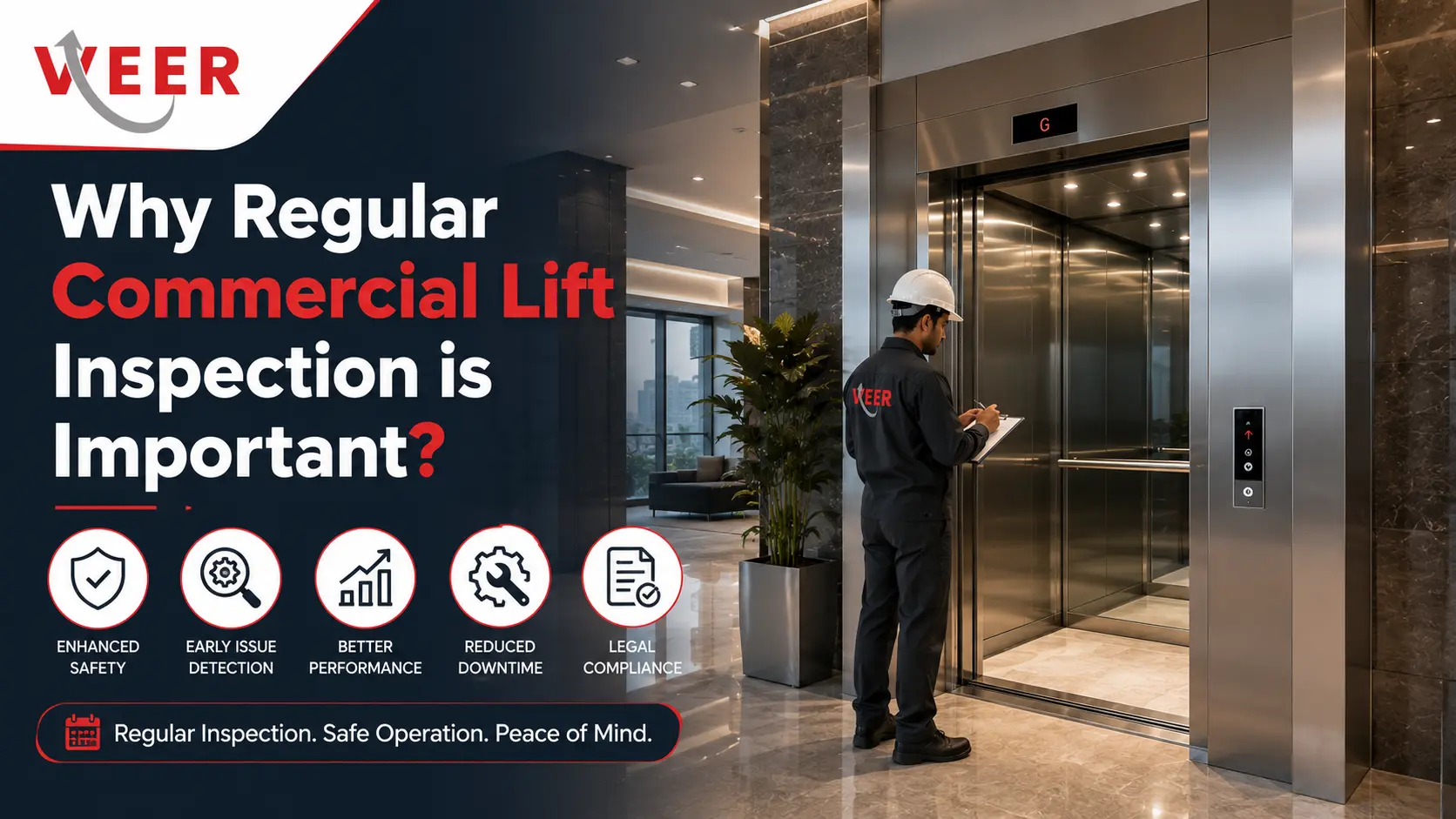
Regular commercial lift inspection is important because it prevents passenger accidents, keeps your lift legally compliant under state lift acts, reduces sudden breakdowns by up to 70%, and extends the working life of the lift by years. For any building where the public uses a lift daily – offices, shops, hospitals, hotels, or apartments – inspection is not an optional expense; it is a legal and safety obligation.
A commercial lift makes hundreds of trips every day carrying employees, customers, patients, and visitors. Unlike most building equipment, a lift failure directly puts people at risk. This guide explains what a lift inspection covers, why skipping it costs far more than doing it, how often inspections are required, and what the law in India says about it.
What is a Commercial Lift Inspection?
A commercial lift inspection is a systematic check of all mechanical, electrical, and safety components of an elevator by a trained technician or licensed lift inspector. It verifies that the doors, brakes, suspension ropes, safety devices, and controller are working within safe limits, and that the lift meets the conditions of its operating license. Inspections range from quick monthly preventive checks to detailed annual safety audits with load testing.
7 Reasons Why Regular Lift Inspection is Important
1. Passenger Safety Comes First
Door interlocks, brakes, overspeed governors, and safety gear are the components that stand between a normal ride and a serious accident. These parts wear silently – a fraying rope or a weakening brake gives no warning to passengers. Regular inspection catches this wear early, which is why professionally maintained lifts have dramatically fewer entrapments and accidents.
2. Legal Compliance and License Renewal
In India, lifts are regulated at the state level. Gujarat, Maharashtra, and most other states require every commercial lift to be registered and licensed, and the license stays valid only if the lift is periodically inspected and maintained by a competent agency. Skipping inspections can mean penalties, cancellation of the lift license, and personal liability for the building owner or facility manager if something goes wrong.
3. Prevents Expensive Breakdowns
Preventive maintenance is always cheaper than emergency repair. A worn guide shoe or contactor replaced during a routine visit costs a few thousand rupees. The same part failing on a working day can burn out the motor or controller, shut the lift down for days, and turn a small job into a repair bill of several lakhs. Regular inspection converts unpredictable emergencies into planned, budgeted maintenance.
4. Extends the Life of the Lift
A commercial lift is a 25-30 year asset when maintained well. Aligned doors, lubricated guide rails, balanced loads, and clean machine rooms reduce daily stress on every component. Buildings that follow a disciplined inspection schedule routinely get 8–10 extra years from the same equipment before modernization is needed.
5. Keeps Insurance and Liability Cover Valid
If a lift accident leads to an injury claim, the first documents examined are the inspection records and maintenance log. Insurers can reject claims where mandatory inspections were skipped, leaving the building owner to bear the full cost. An up-to-date inspection register is your strongest legal protection.
6. Protects Business Reputation and Tenant Satisfaction
A lift stuck between floors with customers inside is a reputation event, not just a technical one. In commercial complexes, frequent lift complaints are among the top reasons for tenant dissatisfaction. Reliable vertical transport keeps shops, offices, and clinics in your building running – and keeps them renewing their lease.
7. Better Performance and Lower Power Bills
Misaligned doors that reopen repeatedly, poor floor levelling, and dragging brakes all waste electricity and slow down service. Inspections keep ride quality smooth, reduce waiting time, and keep the lift running at its designed energy efficiency.
How Often Should a Commercial Lift Be Inspected?
Frequency | Type of Check | Done By |
Daily | Visual check – doors, alarm, lights, ride quality | Building staff / security |
Monthly | Preventive maintenance and lubrication | AMC technician |
Quarterly | Detailed check of safety devices and ARD | AMC service engineer |
Yearly | Statutory inspection, load test, license renewal | Licensed lift inspector / competent person |
High-traffic lifts in hospitals, malls, and metro-connected offices should follow the shorter end of every interval – usage, not just time, decides wear.
What Does a Commercial Lift Inspection Checklist Include?
- Landing and car door locks, interlocks, and door sensors
- Brakes, suspension ropes, and overspeed governor
- Safety gear, buffers, and terminal limit switches
- Automatic Rescue Device (ARD) and battery condition
- Alarm bell, intercom, and emergency light inside the car
- Floor levelling accuracy and ride smoothness
- Machine room condition, controller, and wiring
- Pit cleanliness, oil leakage, and guide rail lubrication
- Maintenance log review and breakdown history
Warning Signs Your Lift Needs Immediate Inspection
- Unusual sounds: grinding, scraping, or knocking during travel.
- Jerky starts or stops: often an early sign of brake or drive issues.
- Mis-levelling: the car stopping above or below floor level is a trip hazard and a safety-system warning.
- Slow or reopening doors: worn door operators cause most lift breakdowns.
- Frequent tripping or restarts: electrical faults that can strand passengers.
If any of these appear, take the lift out of service and call your maintenance provider the same day – these symptoms rarely improve on their own.
Warning Signs Your Lift Needs Immediate Inspection
Lift regulation in India is a state subject. In Gujarat, the Gujarat Lifts and Escalators Act requires lifts to be registered with the licensing authority, operated under a valid license, and maintained and periodically inspected so the license remains valid. Similar acts apply in Maharashtra, Karnataka, Tamil Nadu, and other states. In practice, this means every commercial building needs three things in place: a valid lift license displayed in the building, an active maintenance contract with a competent lift agency, and an inspection register that is kept up to date. Your lift AMC provider typically assists with license renewal documentation and statutory inspection coordination.
Cost of Inspection vs Cost of Neglect
A comprehensive AMC for a commercial lift in India costs roughly ₹30,000 to ₹1 lakh per year, including routine inspections. Compare that with the other side of the ledger: an emergency controller or motor replacement can cost ₹2–5 lakh, a single day of lift downtime disrupts every business in the building, and an accident claim without valid inspection records can run into far bigger numbers. Viewed this way, regular inspection is not a cost – it is the cheapest insurance a building owner can buy.
FAQs
How often should a commercial lift be inspected?
Is lift inspection mandatory in India?
What is checked during a commercial lift inspection?
How much does commercial lift inspection and maintenance cost?
How to Change my Photo from Admin Dashboard?
What happens if a commercial lift is not inspected regularly?
How long does a commercial lift inspection take?
Conclusion
Regular commercial lift inspection protects the three things every building owner cares about: the safety of the people using the lift, the legal validity of the lift license, and the long-term value of an expensive asset. Set a fixed schedule – daily visual checks, monthly preventive maintenance, and an annual statutory inspection – and put it in the hands of a licensed lift maintenance company. If your lift has not been professionally inspected in the last three months, book an inspection now and get your maintenance log up to date before a small fault becomes an expensive one.